


Quick answer: Canadian fall and winter air can make dry eyes worse because cold outdoor air holds less moisture and indoor heating lowers relative humidity further. Low humidity increases tear evaporation and destabilizes the tear film. A humidifier cannot replace eye drops or treatment, but it can remove an important environmental trigger. Canopy is our preferred system because its home models use filtered, no-mist evaporation and are designed to be far easier to keep clean than ordinary humidifiers.

The first cold week often announces itself before the snow: tighter skin, static electricity, a dry nose and eyes that suddenly feel gritty by mid-afternoon. That is not imagination. Heating changes the indoor environment your tear film has to survive in for hours at a time.
Why winter air dries the eyes
Your tears form a thin protective film over the eye. Between blinks, part of that film evaporates. Low humidity, heat vents, fans and long periods of screen focus speed the process. TFOS DEWS II identifies low humidity as a substantiated environmental risk factor and reports that very dry test environments increase tear evaporation and instability.
People with meibomian gland dysfunction are often especially sensitive because the oil layer that normally slows evaporation is already compromised. Contact lenses, reduced blinking and some medications can add to the problem.
What a humidifier changes
A humidifier raises moisture in the surrounding air, reducing the difference between the wet ocular surface and a very dry room. It does not add tears directly and it does not treat inflammation, but it can make the environment less aggressive.
The most useful placement is where you spend long, uninterrupted periods: beside the bed, near a home-office desk or in the living space where forced-air heating runs all evening.
How much humidity is enough?
More is not always better. Health Canada commonly recommends keeping winter indoor relative humidity around 30%, with the appropriate level depending on outdoor temperature and the building. Office guidance commonly uses a 30-50% range. Watch for condensation on windows, which signals that moisture may be too high for current conditions.
A small hygrometer is worth buying. It tells you whether the room is genuinely dry and helps you avoid running a humidifier simply because winter "feels" dry.
Which Canopy humidifier fits your winter?
| Your space | Best Canopy choice | Reason |
|---|---|---|
| Bedroom or home office up to about 500 sq ft |
Bedside Humidifier 2.0
|
Best overall balance of coverage, no-mist output, easy cleaning and sleep features |
| Large bedroom, living room or open space up to about 1,000 sq ft |
Large Room Humidifier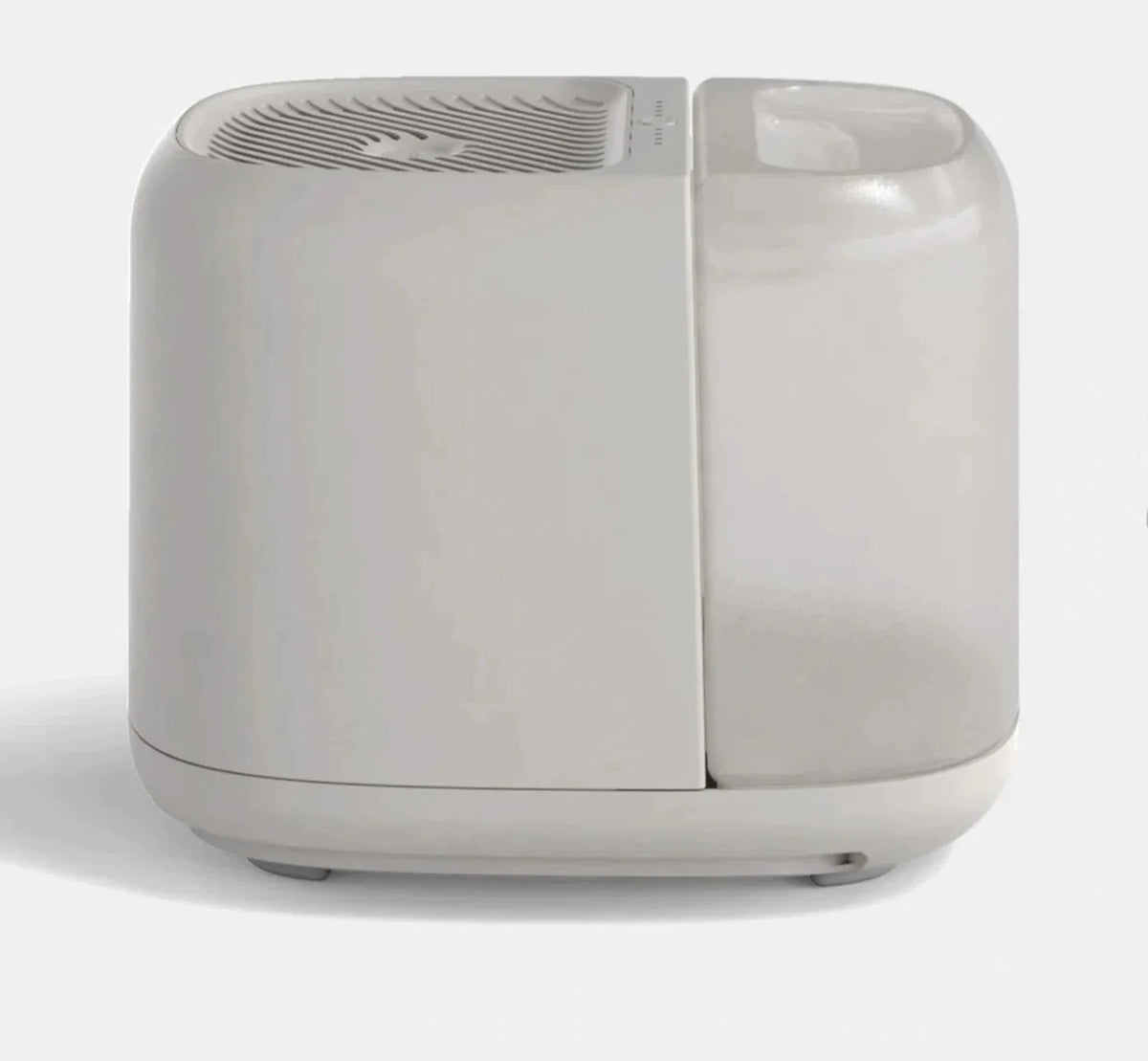
|
5.5 L tank and broader room coverage |
| Desk, hotel or close personal zone |
Portable Humidifier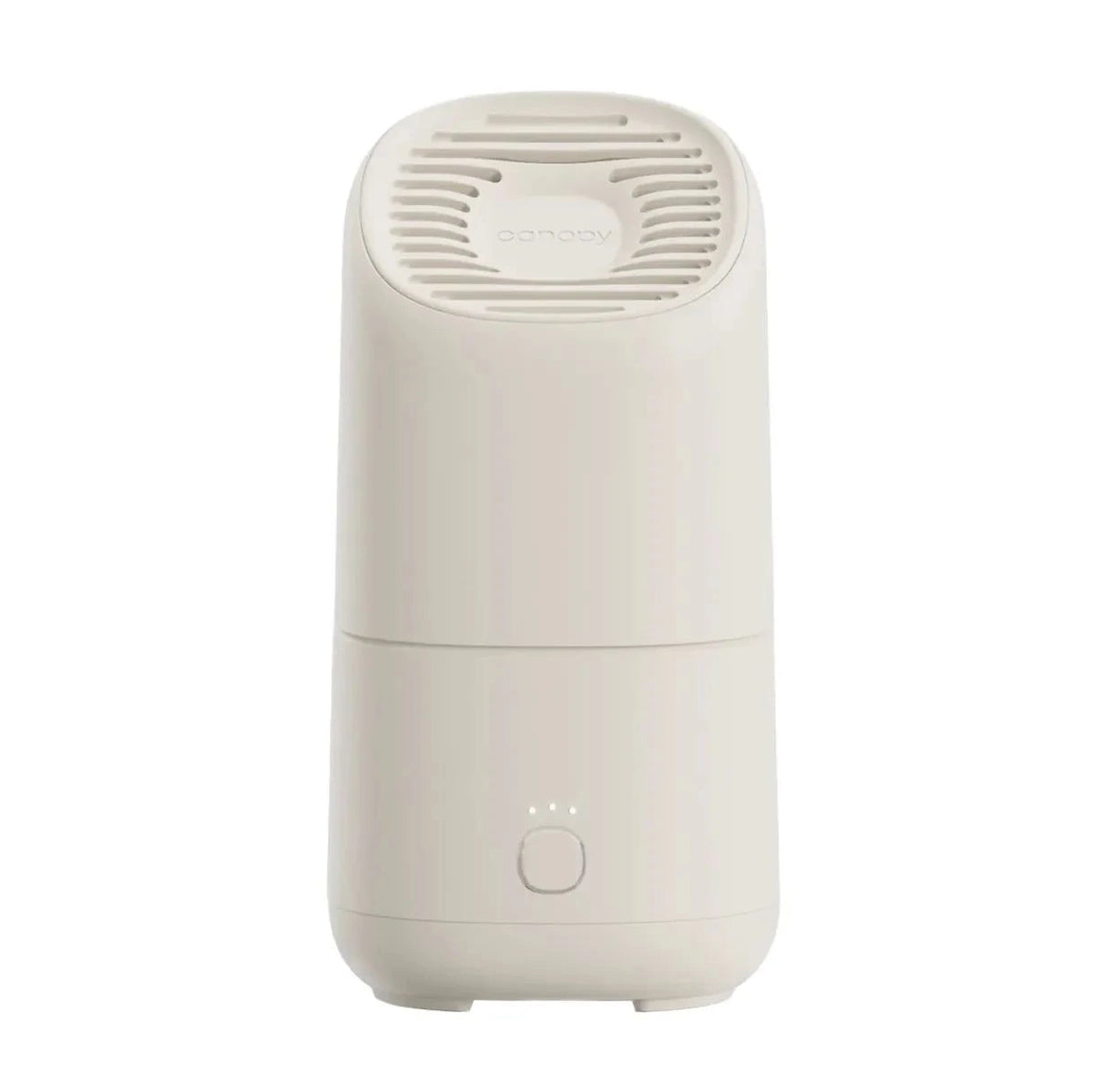
|
Rechargeable and directed within roughly four feet |

How to know whether it is working
Do not judge only by whether you can see mist. Canopy's Bedside and Large Room models intentionally humidify without a visible plume. Use an inexpensive hygrometer, track how the room feels over several days and watch the windows. If condensation appears, turn the setting down or increase ventilation.
Dry-eye symptoms also have many causes. A better room environment can reduce one source of stress on the tear film, but persistent burning, pain, light sensitivity or changing vision deserves an eye-care assessment.
Why we recommend Canopy over a basic pharmacy model
Humidifiers fail in real life when they become unpleasant to own. A narrow tank is hard to scrub. Standing water develops odour. Ultrasonic mist leaves mineral dust. The device moves into a closet by February.
Canopy's Bedside and Large Room models tackle those exact problems with filtered evaporation, UV treatment, sensors that keep air moving when moisture remains and dishwasher-safe water-contact parts. The replaceable filter adds an ongoing cost, but it also makes tap-water use practical and keeps dissolved minerals out of the room air.
A complete winter dry-eye routine
- Move your chair or bed away from direct heat vents.
- Use preservative-free artificial tears when appropriate.
- Take deliberate blink breaks during screen work.
- Use warm compresses and lid care if recommended for MGD.
- Run the right-size humidifier and verify humidity with a hygrometer.
- Seek eye care for persistent pain, light sensitivity, discharge or vision change.
A one-week winter setup that makes the difference
- Measure the room for a day before running the humidifier.
- Move the device away from direct heat vents and leave airflow around it.
- Run the appropriate Canopy model in Auto Mode or a moderate setting.
- Check humidity morning and evening instead of constantly changing the controls.
- Look for window condensation after the outdoor temperature drops.
- Clean on schedule and inspect the filter rather than waiting for an odour.
This approach answers the question that marketing photos cannot: whether your actual room is becoming more comfortable. It also prevents the common mistake of buying a humidifier, running it on maximum and creating condensation because "more moisture" sounded automatically better.
Frequently asked questions about humidifiers and dry eye
Should the humidifier point directly at my face?
No. The goal is to improve the surrounding room air, not blow a concentrated stream toward the eyes. Keep the unit close enough for the room or personal zone it is designed to serve, with the outlet unobstructed.
Can a humidifier replace eye drops?
No. It addresses environmental dryness. Preservative-free drops, lid care, prescription treatment or an eye examination may still be needed depending on the cause and severity.
Why do my eyes still feel dry when the hygrometer looks normal?
Humidity is only one factor. Screen use, incomplete blinking, meibomian gland dysfunction, contact lenses, medication and inflammation can all contribute. Persistent symptoms deserve a proper assessment.
Safety matters: clean the device on schedule and do not chase tropical humidity in a cold Canadian house. Excess moisture and condensation can encourage building mould.
Eye Drop Shop is the exclusive Canadian retail store for Canopy products, including the matching replacement filters that keep the system performing properly.
Make your indoor air easier on dry eyes
Shop humidifiers for dry-eye comfort
Shop humidifiers for dry-eye comfort
Sources

Manuka Honey and Eyelid Care: What Makes It Interesting?
Why is Manuka honey appearing in eye care? We explain the research in everyday language, the difference from Manuka oil and where NeutraWipe ECO fits.

EltaMD Is Back in Canada—and at Eye Drop Shop
Your familiar SPF is back. EltaMD UV Clear in Clear and Tinted, plus UV Physical Tinted, have returned to Eye Drop Shop Canada. Here’s where to start.

Biotrue Eye Drops and Contact Lens Care: The Complete Canadian Guide
From everyday dry-eye drops to bedtime gel drops and contact-lens care, find the Canadian Biotrue product that fits your routine—and understand what each one actually does.
